Focusing on industrial pollution monitoring, this use case employs AI-powered analytics, IoT sensor networks, predictive modeling andsatellites for Earth Observation to optimize resource efficiency, reduce emissions, and ensure compliance with EU environmental standards in the manufacturing sector.

Use case description
The ZDM use case is divided in two sub-use cases:
- Zero defect manufacturing for Coordinate Measurement Machines (CMM) lifecycle, and
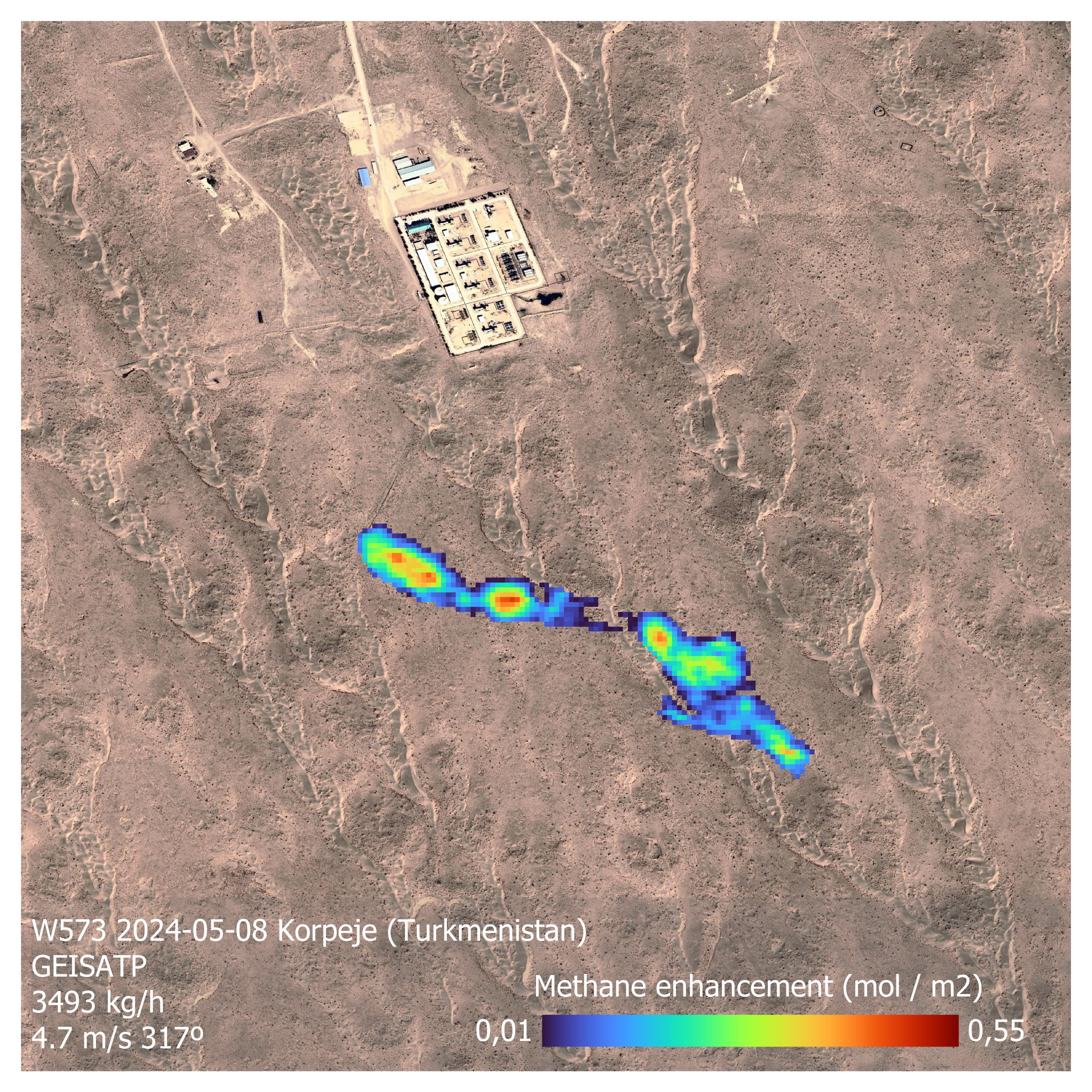
- Detection and monitoring of methane from the Oil&Gas industry
The ZDM for CMM machines will use GDDS to facilitate data exchange across the CMM lifecycle, supporting predictive “Zero Defect, Zero Effect” models and measuring Scope 3 CO2 footprint. The use case will also consider the use of the GDDS for earth observation data sharing provided by SATLANTIS, for detection and monitoring of methane emissions from the Oil&Gas industry.
End users and stakeholders
ZDM data users include:
- Governmental agencies (municipalities)
- Industrial private companies (oil & gas, manufacturers)
- Digital service providers (SMEs and large industries)
Objectives/Benefits
The sub-UC on CMM lifecycle will generate data-related products and services, including a Green CMM Calibration Maintenance Service, a Green 3D Inspection Program Optimizer, and a PCF Metrology Monitoring Service. It will establish inspection routines and optimize digital inspection techniques to reduce GHG emissions. The GDDS will support the M3 Data Space for Metrology Services set up by TRI.
Synergies include Sm4rtenance for smart manufacturing data sharing, Cirpass-2 for digital product passports, M4estro for flexible manufacturing strategies, and Manufacturing X for supply chain optimization. A SaaS module that manages the footprint both physically and digitally, enhancing equipment efficiency, will be offered as a commercial service.
Regarding the detection of methane from Oil&Gas industries, this sub-UC will help decreasing the hazards associated with methane high flammability and its fugitive emissions for the well-being and safety of global and local communities. Given methane’s role as the primary constituent of natural gas, its leaks have the potential to disrupt the stability of energy provisions, leading to possible shortages, economic setbacks, and geopolitical tensions between nations that export and import energy resources.
Sharing data into the GDDS will foster cross-sectoral cooperation and knowledge exchange within the GDDS ecosystem to address environmental challenges.
Partners/Participants
| Legal name | Logo | Country |
|---|---|---|
| ASOCIACION DEEMPRESASTECNOLOGICAS INNOVALIA |  | ES |
| SATLANTIS MICROSATSSA |  | ES |
| TRIMEK SA |  | ES |
Expected outcomes/impact
The ZDM UC will create green, flexible, and digital manufacturing processes, enhancing value chains with AI and data sharing. It will boost equipment efficiency, optimize energy use, and predict environmental footprints. Global data sharing will reduce logistics emissions.
For CMM machines sub-UC, AI and data analytics can increase CMM equipment efficiency by 60% and cut CO2 by 2.2 Tn over 20-25 years. Greener logistics can reduce emissions by 20-30%, and energy-efficient manufacturing can lower energy consumption by 15-30%.
On the other hand, the data from satellites will be used as a Green Deal footprint reduction, in line with the upcoming new EU regulation to reduce methane emissions from the energy sector to reach the EU’s climate goals. Currently methane emissions are the second cause of global warming. These emissions come from different natural sources (around 40% of emissions) and anthropogenic (the remaining 60%).The methane emissions related to oil and gas industry come from a wide variety of sources along the value chain. Some of these emissions are unintentional, such as the lack of sealing or a leaking valve, while other emissions are planned, often carried out for safety reasons or due to the design of the facility or equipment.
The International Energy Agency estimates that 45% of those emissions can be mitigated at no net cost, given that methane is a sellable product in the form of natural gas. Some studies shows that mainly, the emissions of high quantity are happening at pipeline sites that are leaking or deliberately releasing methane.
Contact
Zero defect manufacturing –
Innovalia
Detection and monitoring of methane from the Oil&Gas industry –
SATLANTIS
Alessia Matruglio, matruglio@satlantis.com
R&D Project Manager