
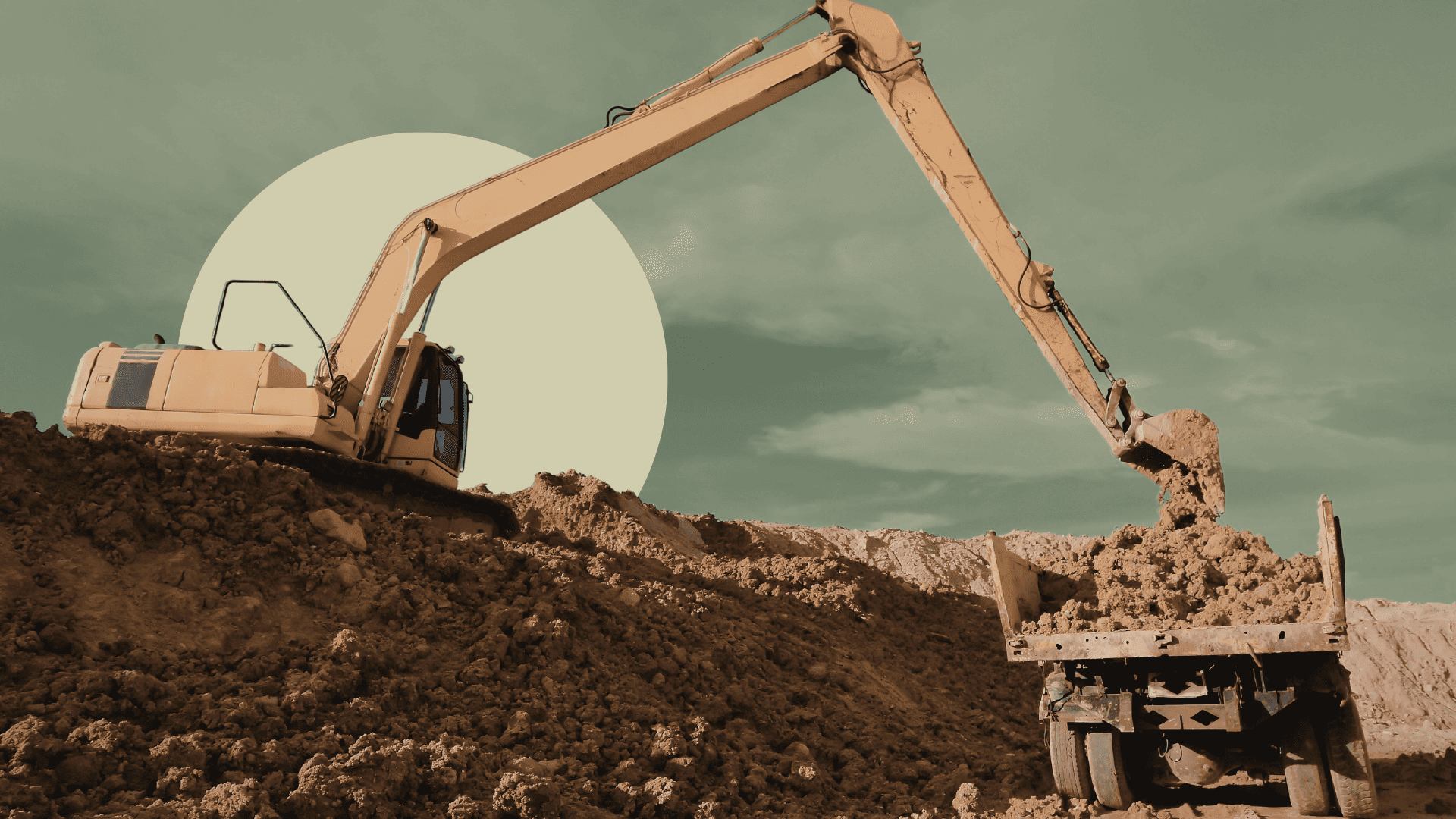
A digital twin will enable circular soil flows and sustainable land use in the Netherlands
By Yvonne Verdonk (GeoNovum) – Use Case: Soil Circularity
Soil is a vital but increasingly scarce resource. Soil use must become more circular. In The Netherlands, the Ministry of Housing and Spatial Planning, Geonovum and Sogelink are creating a data space to support circular soil flows. This work is part of the EU project SAGE: “The Data Space for a Sustainable Green Europe”.
Good soil is needed for both construction works and the improvement of agricultural areas. While excavation projects produce reusable soil, it is currently underutilized. By creating a data space that integrates soil-related datasets and models from multiple providers, informed and substantiated circular decision-making is enabled. The data space combines, for example, logistical and lithological models, land ownership datasets, soil quality data processing, and data on the supply and demand of soil, which are crucial for matching available soil to the most suitable applications.
Digital twin for soil flows
In March 2026 Sogelink has set up a digital twin with a marketplace function in the province of Gelderland. This allows the province to provide insight into the supply and demand of soil flows in Gelderland. With the help of this digital twin, the province can support all chain partners in making circular choices in the Gelderland soil flow chain.
Cost benefit
Parallel to the set up of the digital twin for soil flows, Ecorys – in close collaboration with the Buyers Group Grondstromen – carried out a social cost-benefit analysis (SCBA) for a national data system for circular soil flows. With a net worth of almost €450 million until the year 2050, this cost-benefit ratio is positive. This underlines that investments in data sharing and digital support for circular soil flows are not only desirable from a policy and sustainability perspective, but also provide demonstrable social returns.
Integration EU data space
Steps have also been taken to integrate with the European Green Deal Data Space. Work is being done to functionally and technically integrate the digital twin and the national data system into the Green Deal data space via a data connector and catalogue. To speed up and validate the integration, a technical experiment was conducted on DCAT data exchange between catalogs and data connectors, aimed at interoperability, findability and reusability of datasets across domains. In May this year the team participates in a code sprint with European partners for the further development and practical application of the data space.
Want to know more?
https://www.geonovum.nl/themas/europese-datastrategie/sage (Dutch)
https://www.sogelink.com/nl/nieuws/circular-soils-van-visie-naar-de-praktijk/ (more about the product Circular Soils)
Meet us and check presentations and demonstrations of our work:
April 16, Bodem Breed Symposium
April 27-May , 1 Geospatial World Forum, Amsterdam, The Netherlands
May 12 Open Geodag, Amersfoort, The Netherlands
May, SAGE General Assembly
SAGE (the Data Space for a Sustainable Green Europe) is a Digital Europe co-funded project that will develop a federated, secure, and interoperable data space to support key pillars of